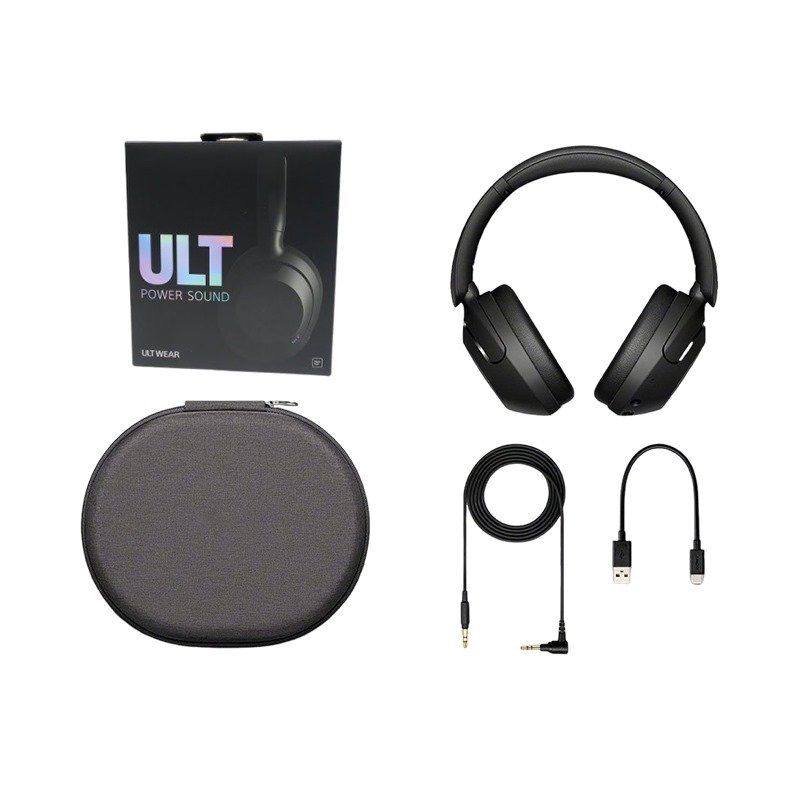
Headphones are no longer just for listening; they're your personal sanctuary, your productivity partner, and your gateway to truly immersive sound. But navigating the sea of marketing claims to find a headset that delivers genuine "Sound Quality, ANC & Performance" can feel like deciphering ancient scrolls. It's not just about bigger bass or fancier features; it's about a symphony of subtle engineering choices that elevate your listening experience from adequate to breathtaking.
So, how do you cut through the noise (pun intended) and pick the perfect pair? Let's take a deep dive into the science, the tech, and the real-world performance that define truly great headphones.
At a Glance: Your Quick Guide to Headphone Excellence
- Sound Quality isn't just volume: It's about clarity, detail, dynamic range, and how faithfully audio is reproduced. Internal components, like capacitors, play a surprisingly crucial role here.
- Active Noise Cancellation (ANC) creates silence: It actively counters external sounds, primarily low-frequency hums, making your music, podcasts, or calls clearer.
- ANC enhances audio quality: By removing distractions, ANC allows you to hear more subtle nuances in your audio.
- Headphone design matters: Over-ear headphones often offer superior ANC and passive isolation due to larger cups, while earbuds prioritize portability.
- Battery life is paramount: Advanced lithium-ion/polymer batteries are key for uninterrupted performance, especially with ANC.
- Beware of marketing hype: Not all "audio-grade" components deliver; understand what truly makes a difference in sound reproduction.
- Key players like Bose and Sony continue to push boundaries in ANC and overall performance, offering robust options for various needs.
The Quest for Perfect Sound: More Than Just Volume
When we talk about "sound quality" in headphones, we're chasing an elusive ideal: absolute fidelity. This isn't just about how loud your music gets, but how accurately it reproduces the original recording. Think of it like looking at a photograph – a high-quality print shows every texture, every shadow, every subtle color gradient. Poor quality, and it's blurry, washed out, or distorted.
In audio, fidelity means hearing every instrument clearly, feeling the depth of the bass, experiencing the sparkle of the treble, and discerning the space where each sound originates. Achieving this requires meticulous engineering, from the drivers that convert electrical signals into sound waves, to the digital-to-analog converters (DACs), amplifiers, and yes, even the tiny passive components tucked away inside.
One often-overlooked hero in this quest for clarity? The humble capacitor.
The Unseen Heroes: Components That Define Your Audio
You might not think about them, but inside every pair of headphones, every amplifier, and every audio device, there are dozens, if not hundreds, of tiny electronic components working in concert. While drivers are the "mouth" of your headphones, converting electricity to sound, components like capacitors are the "lungs" and "nervous system," profoundly impacting the clarity, stability, and overall sonic character of the audio signal before it even reaches those drivers.
Capacitors: Tiny Powerhouses, Huge Impact
Capacitors are fundamental. They store and release electrical energy, filter signals, and stabilize voltages. In audio circuits, their quality directly influences what you hear. A poor capacitor can introduce distortion, blur details, or flatten the soundstage. A good one? It lets the audio signal pass through with minimal interference, preserving the music's original intent.
The differences between capacitors boil down to a few key areas: the material that separates their plates (the dielectric), their internal structure, and unwanted "parasitic" elements.
The Dielectric Difference: Heart of the Capacitor
The dielectric material is perhaps the most critical factor. It determines a capacitor's stability, linearity, and how much "memory" it has.
- Dielectric Constant (K): This value indicates how much charge a material can store. Lower K dielectrics (like polypropylene) tend to be more linear and stable, leading to better sound, but require larger physical capacitors for the same capacitance. Higher K dielectrics (like some ceramics) allow for tiny capacitors but often come with trade-offs.
- Dielectric Absorption (DA): This is a capacitor's "memory effect." After discharge, a small amount of residual voltage can remain, causing a smearing of subtle details in the audio. Imagine a reverberation that lingers slightly too long, blurring the edges of fast notes. This is where DA shows its ugly head.
Here's a breakdown of common capacitor types and their sonic implications:
The Good Guys: Film & C0G Ceramics
For high-fidelity audio signal paths, these are your champions:
- Polypropylene (PP) Film: Widely regarded as a top choice for audio. PP has an extremely low dielectric constant (K≈2.2) and incredibly low dielectric absorption (0.02–0.05%). This translates to neutrality, transparency, and exquisite detail in your audio, with clear treble and tight bass. They're stable, linear, and introduce negligible distortion.
- Polystyrene Film & PTFE (Teflon): Similar to PP, these also offer very low DA and excellent stability, often found in ultra-high-end audiophile gear.
- Class I Ceramics (C0G/NP0): These are stable, linear, and boast very low DA (around 0.6%). While not as universally acclaimed as film capacitors for all audio roles, they are excellent for high-frequency applications and timing-critical circuits, especially in the picofarad (pF) range. They're comparable to PP film in distortion performance.
These types are crucial in ensuring the audio signal remains pure, letting you hear the intricate details of a track.
The Tricky Ones: Electrolytic & Class II Ceramics
These types have their uses, but require careful application in audio:
- Electrolytic (Aluminum/Tantalum): These offer high capacitance in a small package, making them essential for power supplies (where they smooth out voltage ripples). However, they are polarized and exhibit higher dielectric absorption (2-15%) and leakage. If used improperly in the signal path (without correct DC biasing), they can introduce audible even-order harmonic distortion, making the sound "grainy" or flattening the soundstage. "Audio-grade" electrolytics, like Nichicon Muse or Elna Silmic II, claim to minimize these issues, offering specific sonic signatures often described as "warm" or "smooth." Tantalum versions are smaller but can fail catastrophically if overstressed and are generally disliked in analog signal paths for their "grainy" sound.
- Class II Ceramics (X7R, X5R): These are the villains of high-fidelity audio. While compact thanks to their extremely high dielectric constant, they are highly non-linear. Their capacitance can change significantly with voltage, temperature, and age (a 10uF X7R cap can lose over 50% of its capacitance under stress!). They also suffer from high dielectric absorption (0.6-1%) and are piezoelectric, meaning they can convert vibrations into electrical noise (microphonics). In signal paths, they are notorious for introducing audible distortion (up to 1% THD in bass frequencies), leading to a "nasal" or "congested" sound. Avoid these in any part of the audio signal path if sound quality is a priority.
Beyond Dielectrics: Parasitic Elements & Lead Materials
Even beyond the dielectric, other factors influence a capacitor's performance:
- Equivalent Series Resistance (ESR): This represents the total internal resistance. High ESR can reduce a power supply's effectiveness, subtly attenuate high frequencies in crossovers, and generate heat. Lower ESR is generally better for audio, especially in power circuits.
- Equivalent Series Inductance (ESL): This is the effective inductance of the capacitor. While generally not directly audible in the audio band (self-resonance is usually much higher, 100 kHz to MHz), low ESL is crucial for circuit stability and RF immunity. Modern construction techniques, like "non-inductive" designs, minimize ESL.
- Lead & Plate Materials: The materials used for the capacitor's plates and leads can have subtle effects. While aluminum is common, copper and silver offer higher conductivity for minimal ESR. For leads, tinned copper is standard, but some audiophiles prefer oxygen-free copper or silver-plated copper leads, avoiding cheaper tinned steel leads (which are ferromagnetic and have higher resistance) for ultimate transparency.
Actionable Insight for Component-Curious Listeners: If you ever delve into modifying or selecting audio equipment, prioritize polypropylene film or C0G ceramic capacitors in signal paths. For power supply filtering, quality low-ESR electrolytics are necessary, but ensure they are appropriately biased and spec'd for audio. Always, always avoid Class II ceramics where the audio signal flows.
When considering the top tier, you might wonder if the premium price tag for devices like AirPods Max is truly justified. While external features grab headlines, it's often the meticulous selection of internal components, right down to the capacitors, that subtly shapes that 'premium' sound.
Decoding Active Noise Cancellation (ANC): Your Silent Sanctuary
Now, let's pivot from the microscopic internal world to the macroscopic external one. Active Noise Cancellation, or ANC, is perhaps the most transformative technology in modern headphones, promising an oasis of calm in a noisy world.
How ANC Works Its Magic
ANC headphones capture external ambient noise using tiny microphones. Then, incredibly fast, they generate a "counter-soundwave" – essentially, an identical sound wave but with its phase inverted. When these two waves (the external noise and the counter-wave) meet, they cancel each other out. This phenomenon is called destructive interference.
Think of it like two ripples in a pond: if one peak meets another peak, they combine and make a bigger ripple. But if a peak meets a trough, they flatten each other out. That's ANC in action.
- Best for Low Frequencies: ANC is most effective at canceling consistent, low-frequency sounds. Engine rumble on a plane, the hum of an air conditioner, or the drone of a bus are prime targets. This is because these sounds have longer wavelengths, which are easier for the headphone's processing to analyze and invert precisely.
- Less Effective for High Frequencies: As frequencies increase, wavelengths shorten, making it much harder for the system to react quickly enough and precisely invert the sound. Sharp, sudden noises like shouting, crying babies, or keyboard clicks are generally attenuated more by passive isolation (the physical seal of the earcups) than by the active cancellation.
ANC's Unsung Hero: Enhancing Audio Quality
While its primary job is silence, ANC actually enhances your audio quality in a profound way: it allows you to hear more.
By muting external distractions, ANC creates a quieter canvas for your music. This means:
- Perceived Nuances: You can discern subtle musical details, the faint echo of a reverb, or the delicate decay of a cymbal that would otherwise be masked by ambient noise.
- Deeper Bass & Clearer Treble: When background rumble is gone, bass frequencies sound tighter and more impactful, and trebles sparkle without being muddied.
- Expanded Soundstage: The absence of external distractions can make the perceived soundstage (the virtual space where instruments appear to be placed) feel wider and more distinct, making it easier to spatially distinguish different audio elements. Headsets like the Srhythm NC35 headphones are often lauded for creating an immersive soundstage thanks to their effective ANC.
- Dialog Clarity: For movies, podcasts, or calls, ANC significantly improves speech intelligibility, making conversations crisp and clear even in bustling environments.
Earbuds vs. Over-Ears: The ANC Showdown
The form factor of your headphones plays a significant role in ANC effectiveness and overall performance.
- Noise-Canceling Earbuds: Compact, portable, and comfortable for on-the-go use. Examples like Sennheiser Momentum or Srhythm S5 Hybrid ANC Earbuds offer impressive noise cancellation for their size, making them ideal for commutes and travel. Their effectiveness often relies on a good in-ear seal for passive isolation, which augments the active cancellation.
- Traditional Wireless Over-Ear Headphones: These typically offer superior noise cancellation. Their larger earcups completely encapsulate your ears, providing a greater surface area for both passive physical blocking of sound and for the ANC microphones to do their work. This leads to a more immersive and quiet experience, albeit with less portability.
Performance Beyond Sound: Battery, Durability & The Big Players
Beyond the intricacies of sound components and noise cancellation, "performance" also encompasses practical aspects like power, resilience, and the brands leading the charge.
Powering Your Peace: The Battery Life Imperative
For wireless and ANC headphones, battery life isn't just a convenience; it's a critical performance metric. Manufacturers have heavily invested in advanced battery technologies like lithium-ion and lithium-polymer to deliver high energy-to-weight ratios, ensuring long listening sessions without constant recharging.
Models like the Bose Noise Cancelling Headphones 700 are praised for their extended playback hours, a crucial feature for productivity during work calls, lengthy flights, or intense workout sessions. A reliable battery ensures your sonic sanctuary remains uninterrupted.
Built to Last: The Durability Angle
What good is amazing sound quality or powerful ANC if your headphones fall apart after a few months? Durability, while less glamorous than sound specs, is a prime consumer concern. This encompasses:
- Build Materials: Robust plastics, metals, and quality padding that withstand daily wear and tear.
- Joints and Hinges: Areas prone to stress, requiring strong, flexible designs.
- Cable Quality: For wired connections or charging, resilient cables prevent fraying and internal breaks.
- Sweat and Water Resistance: Essential for fitness headphones or those used outdoors.
While specifications might not always detail material strength, consumer reviews and brand reputation often provide good indicators of a product's longevity.
The Titans of Silence: Bose vs. Sony (and others)
The ANC headphone market is fiercely competitive, with a few key players consistently pushing the envelope.
- Bose: The ANC Pioneer: Credited with essentially inventing the mass-market ANC headphone with their QuietComfort series, Bose remains a formidable force. They are known for refining ANC algorithms to an art form, delivering remarkably balanced audio, and creating supremely comfortable designs (e.g., QC35). Features like Adaptive Noise Canceling, which adjusts to your environment, highlight their commitment to innovation. They offer both over-ear and true wireless options, consistently setting a high bar for the industry.
- Sony: The Audio Technologist: Sony has aggressively challenged Bose's dominance, particularly with its high-performance WH-1000X series headphones. Often rivaling or surpassing competitors in ANC effectiveness, Sony also emphasizes high-resolution audio streaming (via codecs like LDAC) and customizable sound profiles. Their Adaptive Sound Control learns your locations and adjusts ANC accordingly. Sony offers a diverse range of over-ear (e.g., WH-1000XM4) and true wireless models (e.g., WF-1000XM4), consistently delivering top-tier audio quality and cutting-edge features.
- Other Contenders: Brands like Sennheiser (known for audiophile-grade sound), Apple (with AirPods Pro and Max integrating seamlessly into their ecosystem), and Samsung (with their Galaxy Buds Pro) also offer strong ANC and performance, driving healthy competition and rapid advancements across the board.
This intense competition benefits consumers, fostering rapid advancements in noise cancellation technology, audio quality, and overall user experience.
Making Your Choice: Navigating the Headphone Landscape
With all this technical jargon and market competition, how do you actually choose the right headphones for you? It boils down to prioritizing your needs and understanding where trade-offs occur.
Define Your Priorities
- Ultimate Sound Quality: If every nuance and detail matters most, prioritize headphones known for transparent sound reproduction. Look for brands that highlight quality internal components (though specifics might be hard to find for off-the-shelf headphones) and support high-resolution audio codecs. You might even consider wired options or open-back designs, which often excel in raw audio fidelity but lack ANC.
- Maximum Noise Cancellation: If peace and quiet in noisy environments are your primary goal, focus on over-ear headphones from top brands like Bose or Sony. Read reviews specifically about ANC effectiveness in various scenarios (planes, commutes, offices).
- Portability & Convenience: For travel or active lifestyles, earbuds or smaller on-ear designs might be preferable. Balance their compact size with their ANC and sound performance.
- Battery Life: If you're often away from a charger, check the rated battery life with ANC enabled.
- Specific Features: Do you need transparency mode to hear your surroundings? Intuitive touch controls? Multi-device connectivity? Spatial audio? These can all factor into your decision.
Beware of Pitfalls
- "Audiophile Grade" Hype: Not every product marketed with "audiophile" buzzwords delivers. True high-fidelity often comes from meticulous design, not just exotic materials. Understanding the capacitor deep dive above can help you spot potential weak links even if you can't open up your headphones.
- Bass-Heavy Doesn't Equal Quality: Many mainstream headphones boost bass. While satisfying for some genres, excessive bass can mask other frequencies and lead to a muddy, unbalanced sound. Look for reviews that describe the sound signature as balanced, detailed, or neutral if fidelity is your aim.
- Ignoring Passive Isolation: Even the best ANC benefits from good passive noise isolation. A snug fit, comfortable earcups, or well-fitting ear tips are essential for both ANC performance and sound quality.
Testing Before Buying
If possible, try before you buy. Listen to a variety of music you know well, in different environments if possible. This personal experience is invaluable as subjective preference plays a huge role in headphone satisfaction.
Your Next Step to Sonic Nirvana
Armed with this deep dive into sound quality, ANC, and performance, you're now better equipped to make an informed decision. Remember, the best headphones aren't necessarily the most expensive or those with the most features; they're the ones that best meet your specific needs and deliver an auditory experience that truly moves you. Whether you're chasing the subtle shimmer of a high-resolution track or the profound silence of a world-class ANC system, a thoughtful approach will guide you to your perfect pair. Happy listening!