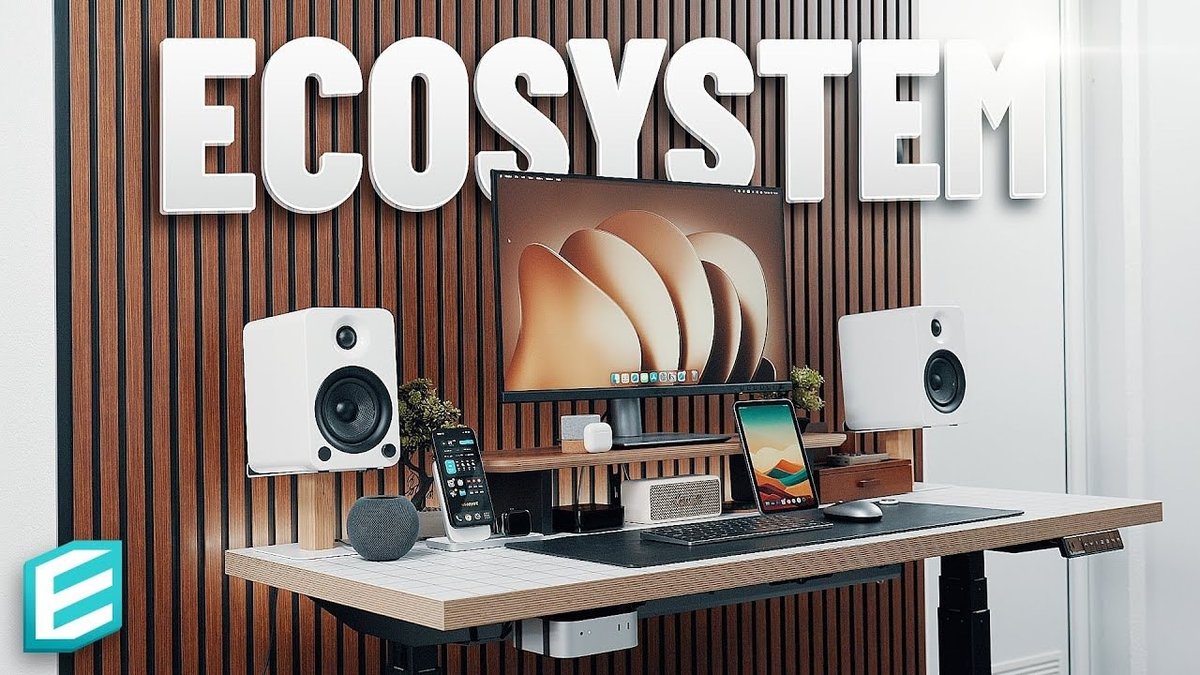
The digital world is a sprawling metropolis of devices, apps, and services, yet few companies have mastered the art of making it feel like a seamless, intuitive home. Apple, with its meticulously crafted Apple Ecosystem Integration & Unique Features, has not just built products; it has engineered an experience that fosters unbreakable user loyalty. This isn't just about owning an iPhone; it's about entering a carefully orchestrated symphony where every note—from your Apple Watch notifying you of an important email to your iPad becoming a second monitor for your Mac—plays in perfect harmony.
For the user, this means a level of convenience and capability that often feels like magic. For product managers and developers, it's a masterclass in strategy, design, and user-centricity, revealing how a unified approach can create a multi-trillion-dollar empire built on trust and effortless interaction.
At a Glance: Apple's Ecosystem Advantage
- Seamless Integration: Devices, services, and apps work together effortlessly, sharing data and functionality.
- Native Optimization: Apps built for Apple's iOS leverage specific hardware and software for superior performance and a richer user experience.
- Unrivaled Privacy & Security: Built-in safeguards, encryption, and user controls protect your data and enhance trust.
- Key Features: Tools like Handoff, Universal Clipboard, AirDrop, Sidecar, and iCloud simplify daily tasks.
- Strategic Blueprint: Apple's success hinges on a closed-loop ecosystem, user-centric iteration, premium positioning, privacy as a feature, global scaling, and a robust developer community.
- Future-Forward: Emerging AI (Apple Intelligence) is set to redefine personalization and data analysis within the ecosystem.
Beyond the Gloss: What Apple's Ecosystem Truly Delivers
When you invest in an Apple device, you're not just buying a piece of hardware; you're gaining entry into a sophisticated network designed to make your digital life simpler, safer, and more productive. This interconnectedness isn't accidental; it's the result of a deliberate strategy rooted in native integration.
The Power of Native Integration: Why It Matters to You
Imagine an app that feels like a natural extension of your device, anticipating your needs and working flawlessly with everything else you use. That's the promise of native integration, where an app is purpose-built for Apple's iOS, leveraging its unique APIs, features, and hardware capabilities. Unlike cross-platform apps that often feel like a compromise, native integration delivers distinct advantages:
- Richer User Experience: Native apps tap directly into Apple-specific features and APIs, allowing for smoother animations, faster response times, and interactions that simply "feel right." Think of the subtle haptic feedback or gestures that are unique to the iPhone—only a native app can fully exploit these nuances for a truly immersive experience.
- Uncompromised Privacy & Security: Apple's ecosystem is built on a foundation of privacy. Native apps can utilize Apple's robust, built-in safeguards like secure token management, data encryption, and Advanced Data Protection. This means your sensitive information, from health data to financial transactions, benefits from layers of protection that are seamlessly integrated into the operating system, fostering a profound sense of trust.
- Future-Proof Adaptability: The digital landscape is always evolving, with new OS updates and emerging technologies like Apple Intelligence arriving regularly. Native apps are inherently more adaptable, designed to easily keep pace with these changes, ensuring your apps remain current, secure, and performant without skipping a beat.
- Seamless Performance Across Devices: This is where the "ecosystem" truly shines. Because native apps are designed within Apple's framework, they inherently understand and interact with the broader network of iPhones, iPads, Macs, and Apple Watches. This interoperability means your tasks, data, and experiences flow effortlessly from one device to another.
- Consistent & Intuitive Design: Apple adheres to core design principles: Clarity, Deference, and Depth. Native apps, by following these guidelines, offer a familiar and intuitive user experience. This consistency reduces learning curves and enhances usability, making every app feel like it belongs, regardless of who developed it.
Your Digital Life, Synchronized: Key Apple Features in Action
The true magic of Apple's ecosystem lies in how its core features and services work in concert, often without you even realizing it. These aren't just standalone utilities; they're the invisible threads that weave your digital life together.
- Apple ID: Your Universal Key
Your Apple ID isn't just a login; it's the central nervous system of your personal Apple universe. This single sign-on grants you access to everything—iCloud, Apple Music, the App Store, and more. It also powers essential features like Family Sharing, allowing up to six family members to share purchases, subscriptions, and even storage, and the indispensable Find My network, which can locate your misplaced devices or even friends and family. - Handoff & Universal Clipboard: Your Workflows, Uninterrupted
Imagine starting an email on your iPhone during your commute, then seamlessly picking up exactly where you left off on your Mac when you arrive at your desk. That's Handoff in action. Complementing this is the Universal Clipboard, a seemingly simple but incredibly powerful feature: copy text, an image, or a video on one Apple device and instantly paste it on another. These features eliminate friction, allowing your work and creativity to flow uninterrupted across your devices. - AirDrop & Sidecar: Effortless Sharing & Productivity Boosts
Need to send a photo to a friend across the room or a document to a colleague in the next cubicle? AirDrop offers instant, wireless sharing between nearby Apple devices, bypassing cumbersome email attachments or messaging apps. And for those moments when you need more screen real estate, Sidecar transforms your iPad into a secondary display for your Mac, or even a digital drawing tablet with Apple Pencil, significantly enhancing your productivity and creative workspace. - iCloud: Your Data, Everywhere, Securely
iCloud isn't just cloud storage; it's the secure hub for your digital memories and important files. It automatically stores and syncs your photos, documents, contacts, calendars, and more across all your devices. With robust built-in safeguards and end-to-end encryption for many data types, you gain peace of mind knowing your information is both accessible and protected, no matter which device you're using. - Apple Pay & Sign In with Apple: Simplicity Meets Security
Apple Pay transforms your iPhone or Apple Watch into a secure, convenient wallet, enabling swift and private purchases in apps, online, and in physical stores. For app developers and users alike, Sign In with Apple simplifies account creation by allowing you to use your existing Apple ID, often masking your real email address for enhanced privacy. This streamlines user acquisition for developers while offering users unparalleled control over their personal data. - HealthKit, ResearchKit, iMessage, & FaceTime: The Human Connection
Apple's commitment to user well-being is evident in HealthKit and ResearchKit. These frameworks allow health and fitness apps to securely share data (with user permission) and facilitate medical research, empowering both individuals and the scientific community. For communication, iMessage and FaceTime offer effortless, secure, and familiar ways to connect. Whether it's a quick chat with end-to-end encryption or a high-quality video call that seamlessly switches between your iPhone, iPad, or Mac, these services enhance engagement and keep you connected within Apple's trusted environment. It's this integration, especially with features like FaceTime, that often leads users to explore other Apple products, perhaps even considering Should you buy AirPods Max for an even richer audio experience during calls.
Building in the Walled Garden: Best Practices for Developers (and What It Means for Users)
For developers, embracing Apple's ecosystem means adhering to a specific set of tools and philosophies. For users, it translates directly into the quality, security, and performance of the apps you download.
Prioritizing Design & Development Tools
At the heart of Apple development is Xcode, the integrated development environment (IDE) that provides everything needed for coding, testing, and debugging iOS, iPadOS, macOS, watchOS, and tvOS apps. Developers leverage Apple's comprehensive documentation and sample code to build apps that feel truly native. Even cross-platform tools like React Native offer specific modules, such as react-native-apple-authentication, to bridge the gap and tap into Apple's unique capabilities. This dedicated toolkit ensures a consistent, high-quality development experience that ultimately benefits the end-user.
Security, Privacy, and Trust: Non-Negotiables
Apple's stringent privacy guidelines are a cornerstone of its ecosystem. Developers are expected to prioritize robust security measures, including:
- End-to-End Encryption: Protecting data in transit and at rest.
- Biometric Authentication: Leveraging Face ID and Touch ID for secure access.
- Secure Storage: Utilizing Keychain for sensitive information like passwords.
- Secure Token Management: Safeguarding user sessions.
For users, this means a higher standard of data protection and transparency. With the advent of Apple Intelligence, developers must also carefully evaluate AI-generated outputs for security implications, reinforcing Apple's commitment to user trust in an AI-driven world.
Optimizing for Peak Performance
Native development offers the distinct advantage of being optimized for Apple's specific hardware and software. This allows developers to fully leverage new platform features and hardware updates for maximum efficiency. Best practices include:
- Code Optimization: Writing clean, efficient code to minimize resource usage.
- Asset Compression: Reducing app size without sacrificing quality.
The goal is to create apps that are not only feature-rich but also incredibly fast and responsive, ensuring a smooth and enjoyable experience on any Apple device.
Navigating the Apple Landscape: Understanding the Trade-offs
While the Apple ecosystem offers unparalleled advantages, it's also important to acknowledge its inherent limitations and challenges. No system is perfect, and understanding these aspects helps to paint a complete picture.
The Pace of Progress: Adapting to OS Updates
Apple's commitment to continuous improvement means regular OS updates and the introduction of new features. For developers, this translates into a constant need to adapt and update their apps to maintain compatibility, leverage new APIs, and ensure optimal performance. While this ensures a modern and secure user experience, it can also be a demanding cycle for developers.
Cross-Platform Realities
While Apple's native integration is a strength, it can also present a challenge for applications that need to span multiple operating systems. Cross-platform development tools, while convenient, often struggle to achieve the same deep integration and performance as native apps. Developers frequently find themselves needing to build specific native modules to access Apple-exclusive features, adding complexity to their development process. The "walled garden," while beautiful inside, can sometimes make it harder to build bridges to other gardens.
The Eco-Footprint and Repairability Conundrum
A significant concern surrounding Apple's design philosophy is the environmental impact of its devices. While Apple has made strides in using recycled materials and moving towards carbon neutrality, the design often prioritizes sleekness and performance over easy repairability and upgradability. This can lead to a shorter functional lifespan for some components, contributing to electronic waste. While refurbished devices offer a more sustainable option, the industry-wide push for greater repairability and a circular economy continues to challenge Apple's design choices.
Gaming: A Shifting Landscape
Historically, Apple's ecosystem, particularly macOS, has lagged behind Windows for serious PC gamers. While Apple Arcade provides a curated collection of mobile games, and cloud gaming services are expanding options, the platform hasn't traditionally been the first choice for high-end, graphically intensive titles. However, with powerful new chips like the A18 and strategic pushes into AR/VR with devices like the Vision Pro, this landscape is rapidly evolving, signaling Apple's potential to become a more formidable player in the gaming world.
The Secret Sauce: Apple's Six Pillars of Unbreakable Loyalty
Apple's $3 trillion valuation and 1.8 billion active devices aren't accidental. They are the direct result of a calculated, long-term product management philosophy centered on six core strategies that build unparalleled user loyalty. These strategies offer invaluable lessons for any product manager aiming to create compelling, sticky experiences.
1. The Power of the Closed-Loop Ecosystem
Apple's mastery lies in controlling the entire stack, from hardware to software to services. This "walled garden" approach creates a cohesive, high-performance environment that locks users in through sheer convenience and superior integration.
- Hardware-Software Synergy: The A18 Chip Advantage: Consider the A18 chip in the iPhone 16, specifically tailored for iOS 18's Apple Intelligence. By designing both the chip and the operating system, Apple ensures optimal performance and a privacy-focused approach to on-device AI. This integrated control isn't just about speed; it's about trust. A 2025 survey highlights that this privacy-first processing gives Apple a significant 20% edge in user trust compared to competitors.
- Services as the Invisible Glue: Services like Apple Music, iCloud, and Apple Pay aren't merely add-ons; they are the connective tissue that makes the ecosystem indispensable. Features like Handoff and iCloud photo sync create "stickiness," helping Apple retain users at an impressive 92% rate (compared to 75% for Spotify) and maintaining a churn rate below 10% for its core services.
- PM Lesson: Integrate features within your own products to create mini-ecosystems. Test how users interact across these features; data shows a 15% uptick in user retention when cross-feature usage is optimized.
2. Relentless User-Centric Iteration
Apple doesn't just release products; it constantly refines them based on deep user understanding and a long-term vision.
- Feedback Loops: Apple utilizes extensive data from beta programs, App Store reviews, and analytics to prioritize features that genuinely improve user lives. For example, iOS 18's enhanced Focus Mode improved user productivity by 25% by directly addressing user feedback on digital distractions.
- Long-Term Roadmaps: Apple plans years, even a decade, in advance. The 2023 adoption of USB-C across its devices wasn't just about regulatory compliance; it was a foundational step enabling future spatial computing with the Vision Pro.
- Incremental Wins: While big launches get headlines, Apple's strategy also includes focusing on high-impact, incremental tweaks, such as 120Hz ProMotion displays or AI-driven camera enhancements, which cumulatively enhance the premium user experience.
- PM Lesson: Structure iterative sprints around user pain points, prioritizing 2-3 high-impact features per cycle. A/B test integrations for significant retention gains, potentially 20-30%.
3. The Allure of Premium Positioning
Apple masterfully crafts a perception of exclusivity and magic around its products, justifying its premium pricing and high margins.
- Controlled Rollouts: Products like the Vision Pro are initially targeted at developers (debuting in 2023, with 500,000 units sold by 2025 at $3,499), building intense buzz and an application ecosystem before a wider consumer release.
- Brand as Moat: Experiences like Spatial Audio or Vision Pro's eye-tracking technology aren't just features; they're "magical" moments that solidify the brand and justify 30-40% profit margins.
- Exclusivity Tactics: Limited stock at product launches creates artificial demand, fueling hype and desire.
- PM Lesson: Position your products as premium with exclusive beta features (e.g., AI analytics) and constantly highlight unique value propositions to drive word-of-mouth growth, aiming for 10-15%.
4. Privacy as a Foundational Product Feature
In an era of increasing data concerns, Apple has successfully positioned privacy as a core differentiator and a product feature in itself.
- On-Device Processing: Apple Intelligence runs AI locally on the device (e.g., Siri's offline mode), enhancing speed, privacy, and user trust. A 2025 Pew Research study found that 65% of users cite privacy as a top reason for choosing Apple products.
- Transparency Tools: Features like App Tracking Transparency (introduced in 2021) empower users to block data sharing. Privacy toggles are integrated into nearly every feature, giving users granular control.
- Trust as Retention: This unwavering commitment to privacy directly translates to user loyalty. The Health app, for instance, retains 85% of its users largely due to its commitment to encrypted health data storage.
- PM Lesson: Integrate opt-in tracking and robust privacy features from the outset, ensuring compliance with regulations like GDPR and CCPA, which can reduce churn by 10-20%.
5. Global Reach with a Local Touch
Apple's global success isn't just about selling the same product everywhere; it's about adapting to local needs and cultural sensitivities.
- Localization Efforts: Apple Pay supports over 70 currencies, the App Store offers region-specific apps (like WeChat in China), and the Vision Pro boasts multilingual AR interfaces.
- Cultural Sensitivity: Features are adapted for local needs, such as India's UPI integration or eco-friendly packaging tailored for EU regulations. These efforts drive 25% higher adoption in non-US markets.
- Sustainability as Appeal: Apple's public commitment to carbon neutrality (achieved in 2025) resonates strongly with specific demographics, particularly 40% of Gen Z consumers, enhancing brand appeal.
- PM Lesson: Segment roadmaps by market, A/B test cultural adaptations, and highlight sustainability efforts to achieve a 15-25% adoption boost in new regions.
6. Nurturing a Thriving Developer Ecosystem
A robust developer community is critical for any platform. Apple invests heavily in tools, support, and revenue-sharing models that incentivize innovation.
- Developer Tools: Swift and ARKit empower developers to create groundbreaking apps. The Vision Pro's 2025 developer program, offering comprehensive APIs for spatial computing, has already spurred over 10,000 AR apps.
- Revenue Sharing: The App Store's revenue-sharing model (30% cut, 15% for smaller developers) funds ecosystem growth and provides a clear path to monetization for developers.
- Community Building: Events like the Worldwide Developers Conference (WWDC) foster collaboration, showcase new technologies, and introduce developers to cutting-edge tools like Apple Intelligence.
- PM Lesson: Treat your partners as co-creators. Offer robust APIs and SDKs, build a strong community, and provide clear monetization paths to drive 10-20% more integrations and innovations.
Apple Intelligence & The Future: What's Next for Your Ecosystem Experience
The arrival of Apple Intelligence marks a pivotal moment, set to redefine how you interact with your devices and data. This isn't just another feature; it's a foundational shift in the ecosystem.
The AI Revolution at Your Fingertips
Advances in AI and Machine Learning, exemplified by Apple Intelligence, are transforming user experiences with deeply personalized services. Imagine Siri becoming truly proactive, suggesting actions based on your context, or your photos being instantly searchable by complex concepts. On-device processing ensures that much of this AI happens privately, giving you enhanced data analysis capabilities without compromising your personal information. The integration of advanced models, potentially like ChatGPT, means more sophisticated and natural interactions across all your Apple apps.
Evolving Expectations: Control and Transparency
As AI becomes more ingrained, user expectations will continue to evolve. You will increasingly demand more transparency about how AI uses your data and more granular control over its functions. Apple's ecosystem is well-positioned to meet these demands, given its long-standing commitment to privacy. The future will involve even more sophisticated privacy toggles and clear explanations, ensuring that while the experience becomes smarter, you always remain in control.
From Theory to Action: Practical Steps for Every Product Manager
Apple's strategic blueprint offers a wealth of actionable insights, regardless of your role in product management. The lessons learned from a $3 trillion tech giant can be scaled and applied to products of any size.
- For Freelance PMs: Leverage Integrated Solutions
When pitching to clients, don't just offer isolated features. Think like Apple: identify how new features can integrate with existing tools or create a mini-ecosystem within a client's product suite. Aim to demonstrate how cross-product roadmapping can lead to a tangible 20% boost in user retention by simplifying workflows and creating seamless experiences. - For Startup PMs: Think Long-Term, Iterate Smart
Resist the urge for short-term fixes. Adopt a long-term mindset, sketching out 12-month (or even longer) roadmaps. Focus your iterative releases on high-impact features, especially those that leverage emerging technologies like AI to improve user experience. Don't be afraid to plant seeds for future integrations, even if they're years away from full fruition. - For Enterprise PMs: Build Your Own Internal Ecosystem
Internally, mimic Apple’s developer ecosystem. Encourage cross-team collaboration by building robust internal APIs and documentation that allow different teams to integrate their tools and data seamlessly. This approach can foster innovation, reduce redundant work, and cut delivery times by as much as 15%, transforming your internal operations into a well-oiled machine.
Embracing the Integrated Future
The Apple ecosystem is far more than a collection of gadgets; it's a testament to the power of thoughtful integration, unwavering user-centricity, and a long-term vision. By understanding the intricate dance between hardware, software, and services, and by prioritizing privacy and developer empowerment, Apple has forged a bond with its users that's incredibly difficult to break. Whether you're a loyal user enjoying the seamless experience or a product professional seeking inspiration, the lessons from Apple's integrated world are clear: build with intention, innovate with purpose, and always, always put the user at the heart of your design. The future of technology is integrated, and Apple continues to write the definitive guide.